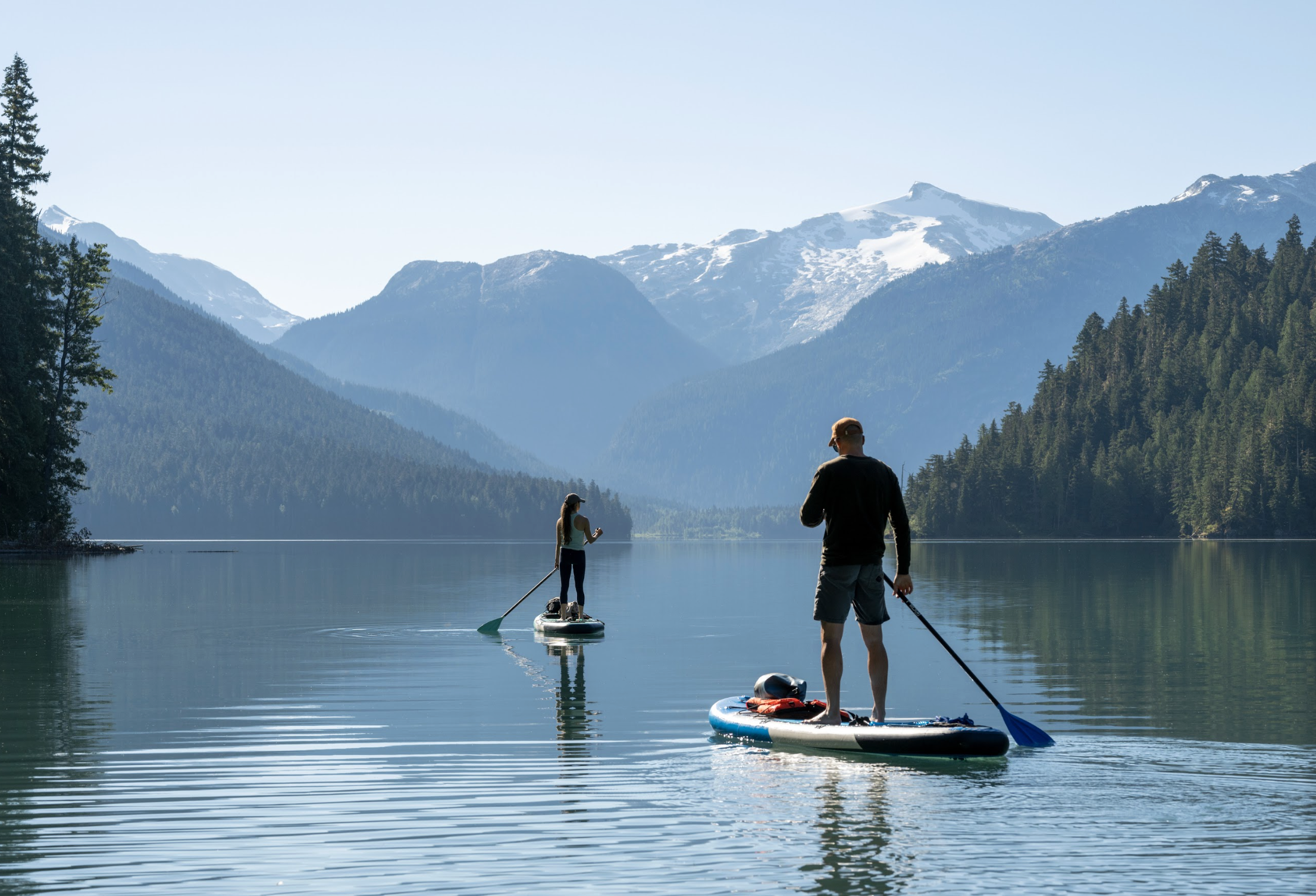
“Train inside so you can play outside” is a phrase we use often at Innovative Fitness, and it really comes down to this: your training should help you do more of the things you love outside the gym.
More hikes. More time on the water. More rounds of golf. More movement. More adventure.
Summer is when that connection gets tested. Your body is asked to do more, across different activities, in more varied conditions, and often in higher heat.
Your training should help you feel ready for that shift so you can stay strong, capable, and able to fully participate in the activities you enjoy most.
We’ve outlined three core areas of focus to prepare your body for the season ahead: joint stability, heat-ready conditioning, and maintaining consistency when routines shift.
Golf swings repeated over 18 holes. Quick directional changes in tennis. Long descents on a hike. Unstable terrain, water-based movement, unpredictable surfaces.
What all of these share is the need for your body to decelerate and stabilize effectively.
Your ability to slow movement down is what protects your joints when volume increases.
Exercises like lateral lunges, skater variations, and controlled step-downs help build:
This is the foundation that allows you to stay consistent through a full summer season, not just the first few weeks.
Summer activities also increase repetitive loading on your tendons and connective tissue.
Isometric training (static holds) is one of the most effective ways to build tolerance here:
This work improves your body’s ability to handle repeated stress without breakdown, which is what keeps you active all season long.
Training outdoors in summer changes how your body responds to effort.
Heat increases cardiovascular strain, elevates heart rate at lower workloads, and places higher demand on hydration and recovery systems. What feels manageable in spring can feel significantly more demanding in July.
Your body becomes more efficient in heat through progressive exposure. A gradual two-week ramp in outdoor activity helps improve temperature regulation, sweat response, and overall cardiovascular control under load.
In hotter conditions, pace becomes unreliable. Use Rate of Perceived Exertion (RPE) instead:
This supports endurance without overloading your system during higher-stress weeks.
Plain water is often insufficient for high-heat activity. A balanced electrolyte strategy (sodium, potassium, magnesium) supports cellular function and helps reduce fatigue from mineral loss.
Summer rarely follows a structured routine.
Travel, social events, changing schedules, and time away from equipment all challenge consistency. The goal isn’t perfection, it’s maintaining enough stimulus to stay adapted.
When you don’t have access to a full gym, focus on tempo and control.
Slow, intentional movements (especially 3–5 second lowering phases) create strong training stimulus without heavy load:
The emphasis here is control and quality.
You don’t need long sessions to maintain progress.
Short 10–15 minute movement blocks can be highly effective for maintaining:
A few of these sessions each week is often enough to stay on track through a busy summer schedule.
The most effective summer training plan isn’t built around aesthetics, but around how your body is expected to perform in real life.
When you build stability, adapt to heat, and stay consistent in unpredictable routines, you don’t just improve fitness, you improve how reliably your body supports your everyday life.
If you’re looking for support staying consistent this summer, our upcoming IF Movement Challenge (starting July 1) is designed to help you stay active, build momentum, and keep moving through a busy season.
.jpg)