Most people think they’re training but in reality, they’re just exercising. While exercise is great, it doesn’t always deliver the same results, safety, or efficiency as a properly designed training plan. If you’re putting in the time, you want to make sure you’re actually moving forward.
So what makes the difference?
If you don’t know where you’re starting from, it’s difficult to build the most effective path forward. That’s why proper training begins with assessment.
This should include:
This information creates a starting point. When combined with your goals, it allows a coach to build a program that’s tailored to your body, rather than based on assumptions. Without this step, even well-intentioned programs can miss the mark.
Most people focus on output: lifting more weight, moving faster, or pushing harder. But how you move matters just as much as how much you do.
A proper assessment should evaluate:
Because while resistance training builds strength, it also reinforces movement patterns. If those patterns aren’t addressed, you increase the likelihood of plateau or injury. When movement quality improves, performance becomes more sustainable and results tend to follow.
Training without tracking is guessing. Establishing clear baselines allows both you and your coach to measure progress over time.
This can include:
Reassessments should be built into the process, not treated as a one-time event. They provide clarity on what’s improving, what needs to change, and how your program should evolve. This keeps your training aligned, focused, and effective over the long term.
At Innovative Fitness, every Member begins with a Level 1 Assessment.
This establishes a clear understanding of how your body moves, your current capacity, and key baseline metrics. For many people, this is the most important first step and sets the foundation for effective training.
From there, Level 2 and Level 3 Assessments are available for those who want to go deeper.
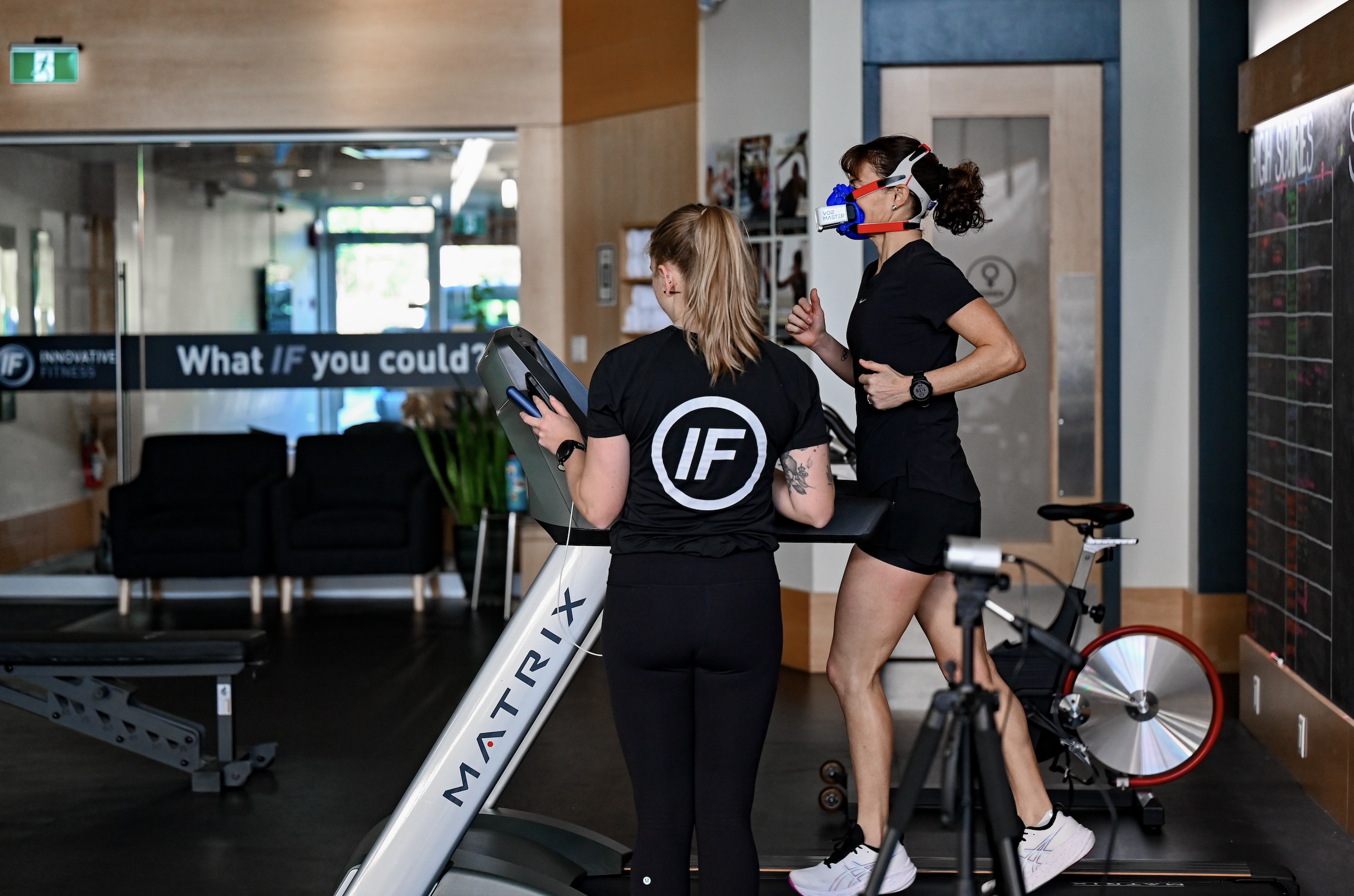
These more advanced options expand beyond movement and performance to look at how your body is functioning internally. These use data like VO₂, blood biomarkers, and other health indicators to further refine your training approach. Not everyone needs to go to that level right away. But for those looking to optimize performance, better understand their health, or break through plateaus, it can provide a more complete picture.
At its core, training is a decision-making process. What exercises you do, how much load you use, how often you train, and how you progress, all of it should be informed by something.
With the right information, your program becomes:
This is what separates simply working out from following a structured training plan customized for you and designed to get you lasting results.
When people hear terms like biomechanics, physiology, and biometrics, they often assume the process will feel clinical or overly technical. It shouldn’t.
A strong coaching experience takes that information and turns it into sessions that are:
Because even the best plan only works if you stay consistent with it.
At Innovative Fitness, every program starts with a clear understanding of your body, your goals, and your starting point. Right now, when you commit to 3 months, receive up to $500 to reinvest in your fitness journey. Start with a complimentary consultation and see what a more personalized, data-driven approach looks like.
A fitness assessment evaluates how your body moves, your current strength and capacity, and key health metrics. This creates a baseline, allowing your program to be tailored specifically to you and tracked over time.
Exercise is general physical activity. Training is structured, goal-oriented, and based on a plan. It uses assessments and data to guide decisions and improve results over time.
For individuals looking to optimize performance, reduce injury risk, or better understand their health, advanced assessments provide deeper insight into how the body functions and how to train more effectively.
Level 1 focuses on movement quality, strength, capacity, and key baseline metrics. It’s where every Member starts and provides the foundation for a personalized training plan.
Level 2 and Level 3 go deeper, looking at how your body is functioning internally. This can include VO₂ testing, blood biomarkers, nutrition, and other health data to create a more comprehensive and precise approach to training.
.jpg)