"Not all those who wander are lost." - J.R.R. Tolkien
If you’re familiar with The Lord of the Rings, you can probably picture those sweeping mountain scenes of the fellowship trekking through rugged landscapes that somehow feel both epic and slightly impossible. Honestly, here in British Columbia, we don’t have to look very far to find the same kind of scenery. From the North Shore mountains to the trails throughout the Fraser Valley, hiking season has a way of pulling people back outside the second the sun shows up.
But every year, many of us make the same mistake: we underestimate how physically demanding hiking actually is.
After a winter spent moving a little less and layering up a little more, it’s easy to think, “I walk all the time. How hard can a four-hour hike be?”
Then somewhere around the second steep climb, your lungs are working overtime, your legs are shaking on the descent, and suddenly the summit snack doesn’t feel as rewarding as it looked on Instagram.
The good news is that hiking fitness is trainable. With the right combination of strength, endurance, and preparation, you can feel stronger on the trail, recover faster afterward, and actually enjoy the experience instead of just surviving it.
Most hikes in BC are not flat. Even moderate trails usually involve sustained elevation gain, uneven terrain, stairs, rocks, and long descents.
Walking is a great foundation for general health, but if you want to prepare for hiking season specifically, you need to train for incline and sustained effort.
A few simple ways to start:
The goal isn’t to make every workout exhausting. It’s to gradually improve your cardiovascular endurance so climbs feel more manageable and recovery between efforts becomes easier.
When you hike, your legs are doing more than simply moving you forward. They’re stabilizing your body over uneven terrain, absorbing impact on descents, and helping protect your joints over long periods of time.
And surprisingly, going downhill is often harder on the body than climbing up.
Descending requires eccentric strength, which is your muscles’ ability to control movement while lengthening under tension. If you’ve ever felt your knees or quads completely taxed after a hike, this is usually why.
A few exercises that can help prepare your body for hiking season:
These build lower-body strength for climbing and help improve stability on uneven terrain.
One of the most transferable hiking exercises. Focus on controlled movement, especially on the way down.
A strong core improves balance, posture, and control while carrying a backpack or navigating technical trails.
Exercises like split squats or single-leg deadlifts can help improve coordination and reduce unnecessary strain through the hips, knees, and ankles.
If you really want to understand your hiking fitness, VO₂ max testing can be an incredibly useful tool.
VO₂ max measures how efficiently your body uses oxygen during exercise. In practical terms, it helps determine how well your cardiovascular system can sustain longer, more demanding efforts, exactly the kind of effort required during steep hikes or multi-hour climbs.
At Innovative Fitness, VO₂ max testing helps create a more personalized approach to endurance training.
Instead of guessing how hard you should be training, you can identify:
It also gives hikers a clearer roadmap when preparing for more ambitious goals, whether that’s tackling a challenging BC summit or planning a bucket-list trek like Mount Kilimanjaro.
And yes, it may also reduce the number of “I’m just stopping to admire the view” breaks along the way.
A new pair of hiking boots should never make their debut halfway through a long trail.
Before hiking season ramps up:
The same goes for your backpack.
A pack that feels light at home can feel very different two hours into a hike. Start training with the gear you plan to use and slowly build toward realistic trail weight with water, layers, snacks, and essentials included.
You don’t need to be an elite athlete to enjoy the hiking season. But preparing your body before your first big hike can make the experience dramatically more enjoyable.
A well-rounded hiking training plan can help you:
Most importantly, it allows you to spend less time focused on fatigue and more time actually enjoying the experience: the views, the fresh air, the people you’re with, and the reason you wanted to get outside in the first place.
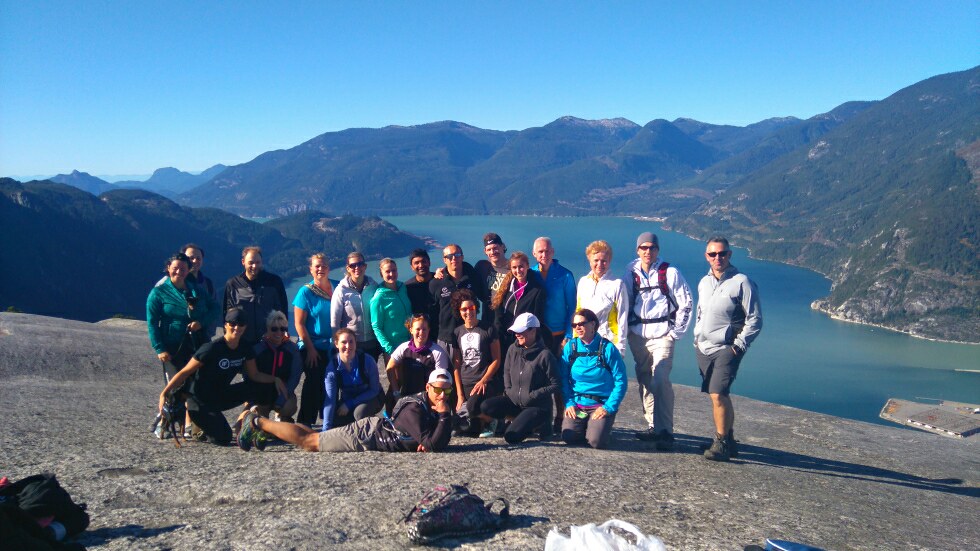
This summer and fall, Innovative Fitness will be hosting a series of community hikes throughout BC, giving our community an opportunity to train toward something together, connect outside the studio, and explore some incredible local trails along the way.
Join us for our summer hike series and connect with your nearest Innovative Fitness studio to see which hikes are happening in your local area.
.jpg)